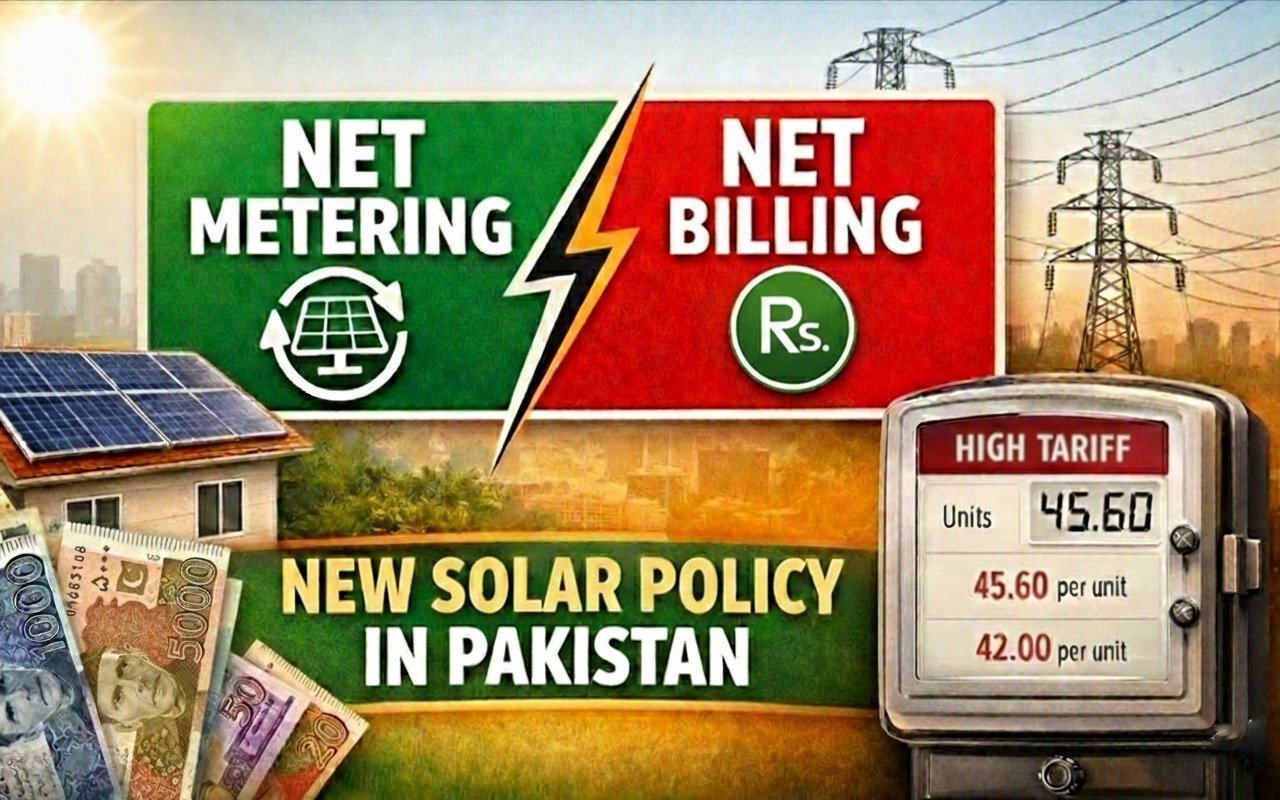
Pakistan’s solar landscape is undergoing a major policy shift. This has raised concerns among rooftop solar users across the country.
The debate around net metering vs net billing in Pakistan has intensified since NEPRA announced the new policy. With rising tariffs and load shedding, solar power has become a priority. However, this recent change has created confusion. That’s why understanding how it affects your investment is essential.
Has Net Metering Ended in Pakistan?
Yes, NEPRA (National Electric Power Regulatory Authority) has replaced the net metering system with a net billing system. This decision comes at a time when solar energy usage was rapidly increasing across Pakistan.
But does this mean solar is no longer beneficial? In this article, we will explain in complete detail the difference between net metering vs net billing, the new tariff rates, and how you can still benefit from solar under the new policy.
Net Metering vs Net Billing: What’s the Real Difference?
Let’s first understand the basic difference between both systems. This is the core information every solar user should know.
How Old Net Metering System Worked
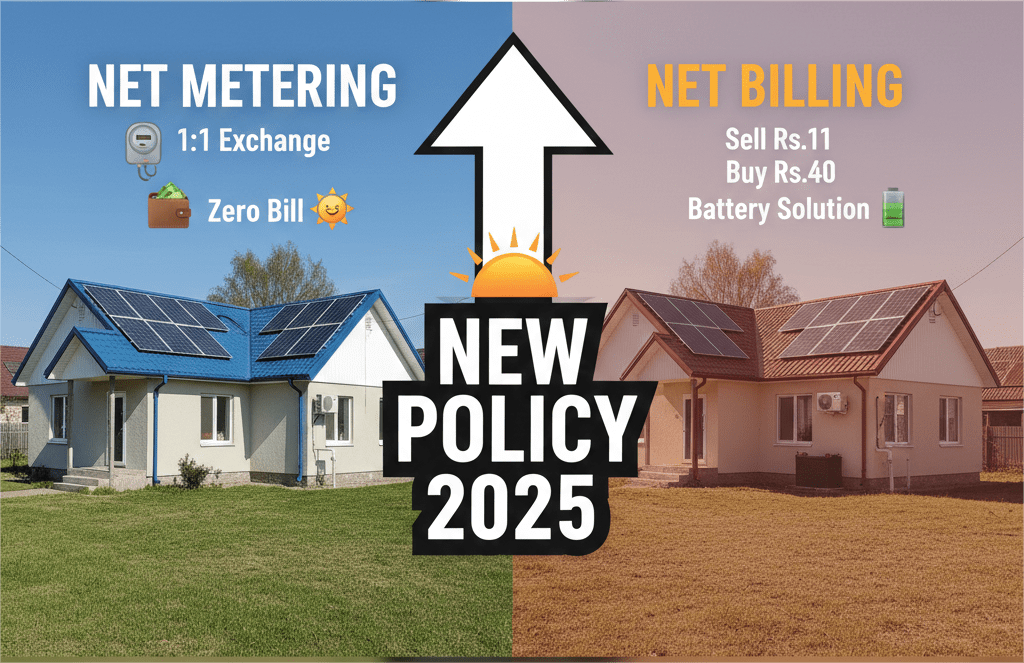
Under the previous net metering system:
- Solar consumers could balance the electricity they produced with what they consumed.
- If they exported extra units to the grid, those units were deducted from their bill.
- Result: Minimum or zero electricity bill.
- 1:1 exchange ratio – meaning the units you exported, you got back
NEPRA New Net Billing Policy 2025 Explained
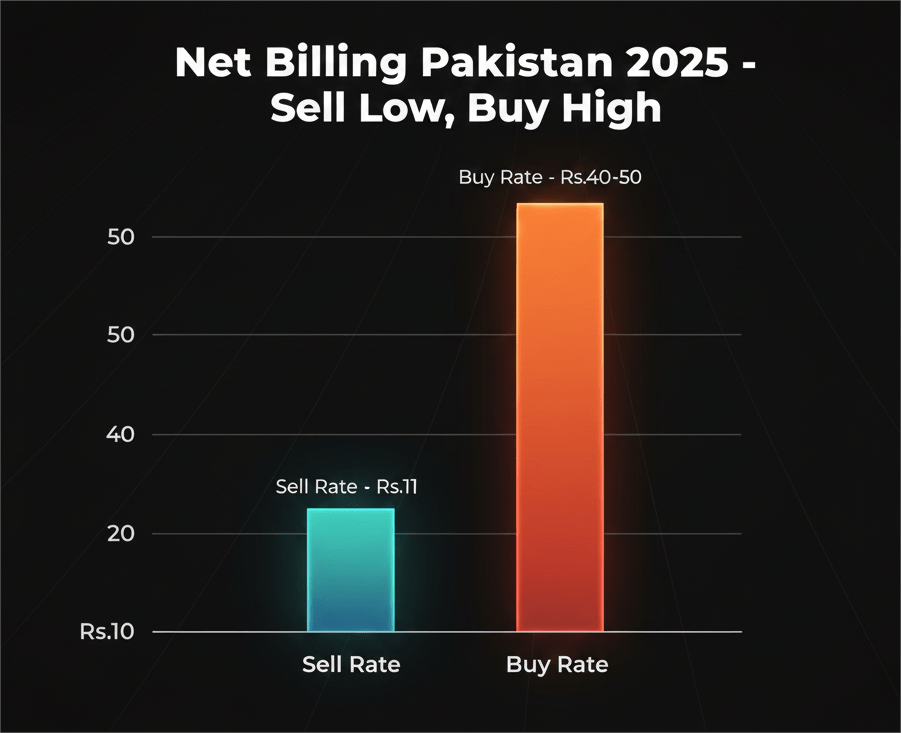
According to NEPRA, Pakistan has officially replaced net metering with net billing for new solar connections.
How It Works:
- Sell to grid: Extra solar units exported at Rs. 11 per unit.
- Buy from grid: Electricity purchased at Rs. 40 to 50+ per unit.
- Key change: No more 1:1 exchange — you sell low, buy high
- For official details, visit NEPRA’s website .
| Comparison | Old System | New System |
| Export rate | 1:1 adjustment | Rs. 11/unit |
| Import rate | Same as export | Rs. 40-50/unit |
| Best strategy | Export maximum | Use or store |
Whether you are an existing user or planning a new installation, your approach must evolve.
1. For Existing User:
Will existing net metering consumers be shifted?
Yes — eventually. NEPRA has confirmed that existing users will gradually transition to net billing. But it won’t happen overnight.
What you should do now:
- Track your system — monitor daytime usage vs export.
- Plan for battery in the next 2–3 years.
- Run heavy appliances (ACs, motors, washing machines) during daylight hours
- People who installed solar in 2015–16 have already doubled their investment. You will too
2. For New Solar Installation:
Is solar still worth installing in Pakistan?
Absolutely yes — but with a smarter approach.
What to do:
- Don’t install a basic on-grid system — it relies entirely on the grid, which is risky now.
- Go for a hybrid system — higher upfront cost, but you’ll thank yourself later.
- Battery size: You don’t need to run your whole house. Just enough to get through the night.
Before installing, read our guide on Common Solar Installation Mistakes to Avoid . Learn from others’ mistakes, not your own.
Need professional help? Check our Solar Installation Services page
3. 4 Reasons Why Solar is Still Worth It:
- Tariff Hikes Continue:
- Electricity tariffs in Pakistan are increasing by 15-20% every year
- Solar provides protection against these hikes
-
- Load Shedding Solution:
-
- Despite net billing, the load shedding issue hasn’t been resolved
-
- Solar + Battery = 24/7 uninterrupted power
-
- Load Shedding Solution:
-
- Long-Term Investment:
-
- Solar system life is 20-25 years
-
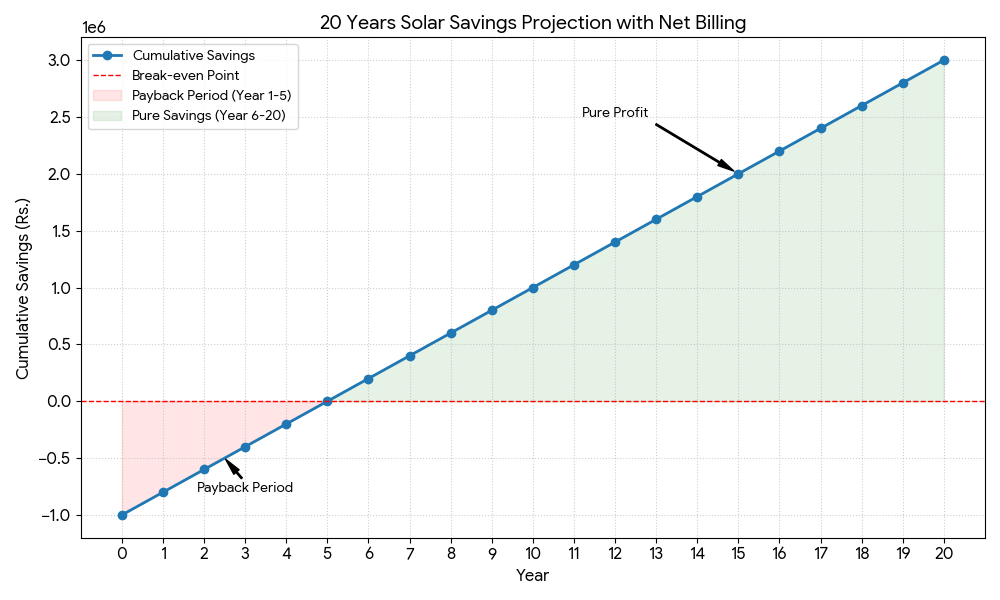
- Even with net billing, the system will pay for itself in 5-7 years
-
- After that, 13-18 years of almost free electricity
-
- Long-Term Investment:
-
- Property Value Increase:
-
- Properties with solar installations have higher resale value
-
- Buyers prefer solar-equipped homes
-
- Property Value Increase:
Hybrid Solar System: The Future-Proof Solution
In the net billing era, a hybrid solar system isn’t just an option — it’s practically a necessity if you want maximum savings. When choosing components for your hybrid system, panel quality matters most. Check our guide on LONGi, Jinko and Canadian Solar: Best Solar Panels for Pakistan to select the right brand for long-term performance. Good panels ensure you generate more power even in low-light conditions, which directly impacts your savings.
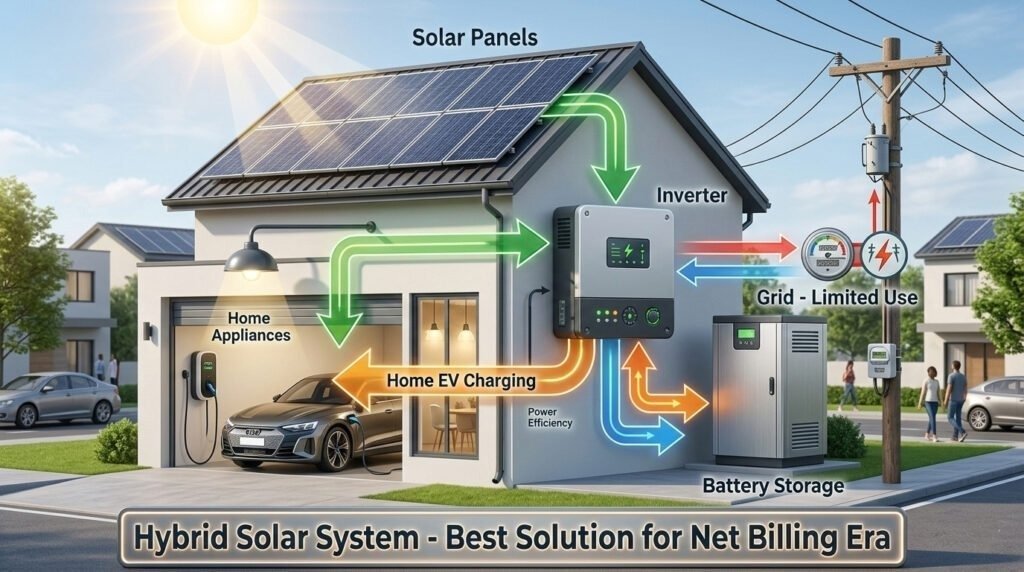
How a Hybrid System Works:
- Day time: Use electricity directly from solar panels.
- Extra units: Store in batteries instead of exporting at just Rs. 11/unit.
- Night time: Use battery power instead of purchasing at Rs. 40-50/unit.
The benefit? No need to buy expensive grid electricity. You’re also protected from future tariff hikes. The beauty of a hybrid system is that it future-proofs your investment.
Solar Investment Future in Pakistan
Despite net billing, solar energy remains the best long-term investment.
Financial Breakdown:
| System Type | Initial Cost | Payback Period | 20 Years Savings |
| On-Grid Solar (No Battery) | Rs. 500,000 | 5-6 years | Rs. 2.5 Million |
| Hybrid Solar (With Battery) | Rs. 800,000 | 7-8 years | Rs. 4 Million |
Note: These are approximate figures. Actual savings depend on your consumption pattern.
If You’re Confused About Installing Now or Waiting
Most common situation. People say “let’s wait for policy clarity.”
Honestly? Waiting won’t help:
- Tariffs rise 15–20% yearly — next year grid power could be Rs. 50/unit.
- Net billing is the new normal — it’s not going away.
- The sooner you install, the sooner your payback period starts
My advice? Stop overthinking. Just install. But design smartly — hybrid system, realistic expectations, and professional installation.
Has net metering really ended? Is solar no longer worth it?
Yes, the old net metering system is gone for new connections. But saying “solar is useless” is completely wrong.
I work with solar users every day. Those who manage consumption smartly still save 60–70% on bills. Add a battery, and savings get even better.