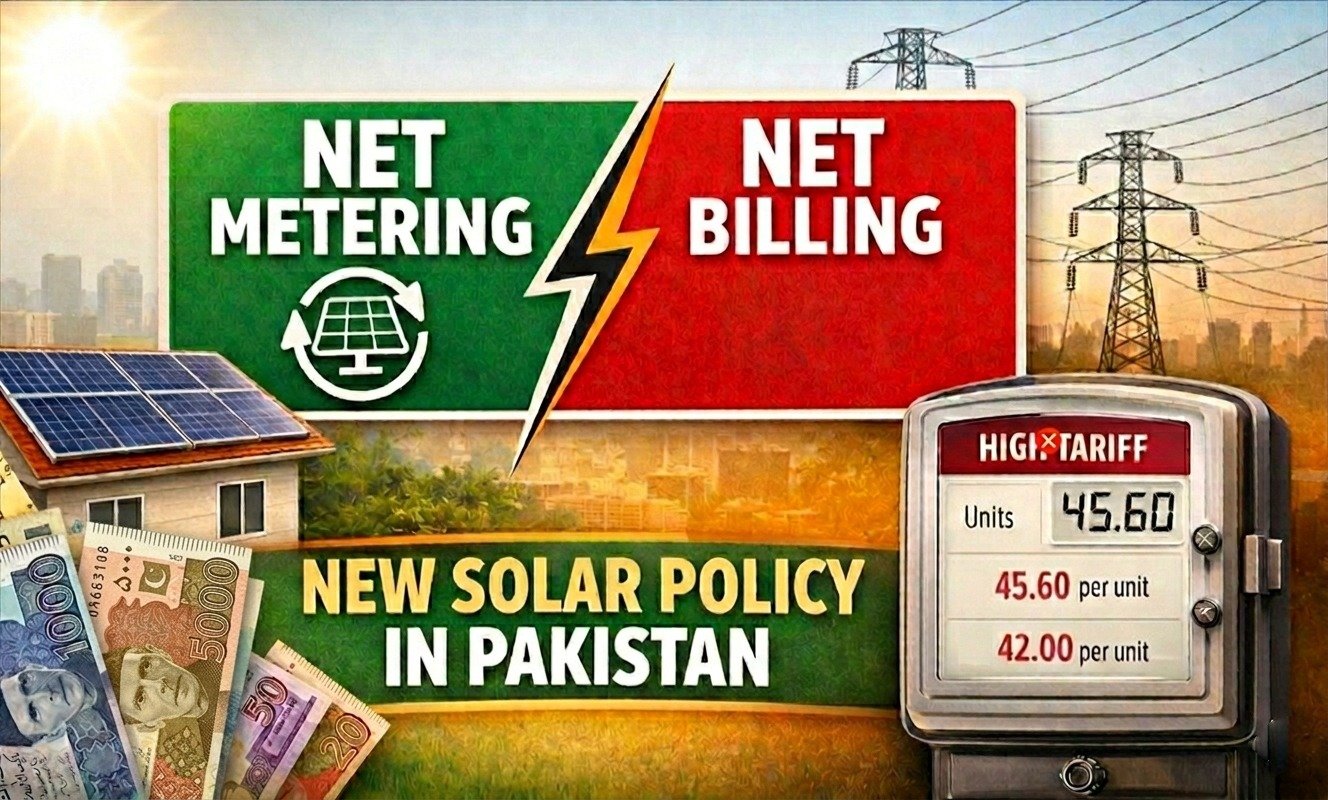
Pakistan’s solar landscape is undergoing a major policy shift. This has raised concerns among rooftop solar users across the country.
The debate around net metering vs net billing in Pakistan has intensified since NEPRA announced the new policy. With rising tariffs and load shedding, solar power has become a priority. However, this recent change has created confusion. That’s why understanding how it affects your investment is essential.
Has Net Metering Ended in Pakistan?
Yes, NEPRA (National Electric Power Regulatory Authority) has replaced the net metering system with a net billing system. This decision comes at a time when solar energy usage was rapidly increasing across Pakistan.
But does this mean solar is no longer beneficial? In this article, we will explain in complete detail the difference between net metering vs net billing, the new tariff rates, and how you can still benefit from solar under the new policy.
Net Metering vs Net Billing: What’s the Real Difference?
Let’s first understand the basic difference between both systems. This is the core information every solar user should know.
How Old Net Metering System Worked
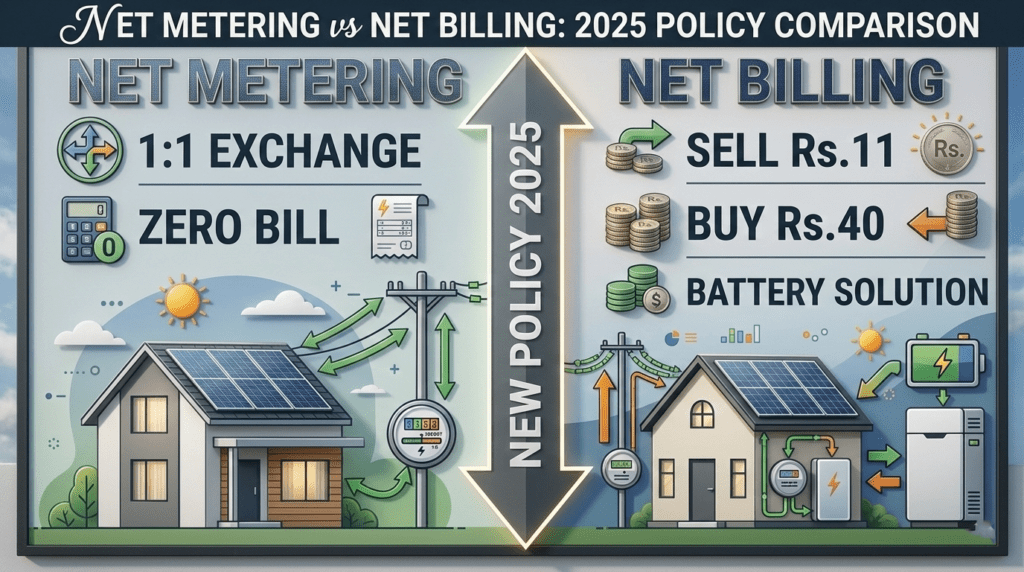
Under the previous net metering system:
- Solar consumers could balance the electricity they produced with what they consumed
- If they exported extra units to the grid, those units were deducted from their bill
- Result: Minimum or zero electricity bill
- 1:1 exchange ratio – meaning the units you exported, you got back
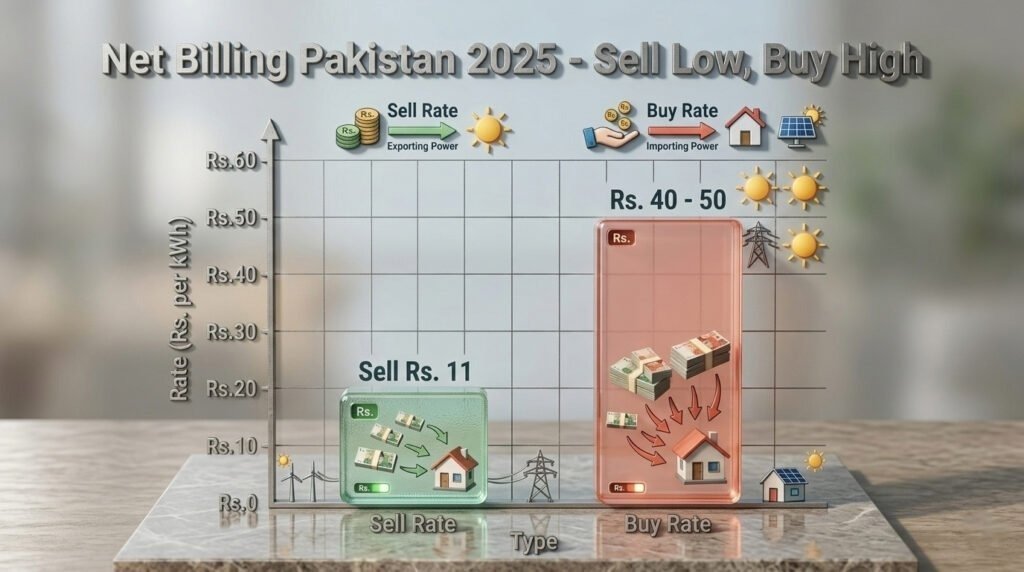
NEPRA New Net Billing Policy 2025 Explained
According to NEPRA, Pakistan has officially replaced net metering with net billing for new solar connections.
How It Works:
- Sell to grid: Extra solar units exported at Rs. 11 per unit
- Buy from grid: Electricity purchased at Rs. 40 to 50+ per unit
- Key change: No more 1:1 exchange — you sell low, buy high
For official details, visit NEPRA’s website .
| Comparison | Old System | New System |
| Export rate | 1:1 adjustment | Rs. 11/unit |
| Import rate | Same as export | Rs. 40-50/unit |
| Best strategy | Export maximum | Use or store |
New Tariff Rates: How Much Will You Sell For, How Much Will You Buy For?
This is the most important question every solar user is asking. Let’s understand with an example:
Example Calculation:
| Scenario | Old Net Metering | New Net Billing |
| Monthly Production | 500 units | 500 units |
| Monthly Consumption | 300 units | 300 units |
| Extra Units Exported | 200 units | 200 units |
| What You Get? | 200 units adjusted in next bill | Rs. 2,200 (200 x Rs.11) |
| If You Take from Grid at Night? | – | 200 units x Rs. 40 = Rs. 8,000 payable |
Under net billing, daytime consumption has become more important than ever. The units you use during the day will give you maximum savings.
Will Existing Net Metering Consumers Be Shifted?
This is a very important question on the minds of existing solar users.
According to NEPRA’s revised policy:
- Those who are already using net metering will eventually be shifted to the net billing system
- This transition will not be sudden – it will be implemented gradually
- However, you should start planning to upgrade your system
- Especially consider battery backup solutions
Solar Still Worth Installing in Pakistan?
This is the biggest question. Short answer: Yes, but you need to change your strategy.
If you’re unsure about which type of system suits your needs, I’d highly recommend reading our detailed comparison: On Grid, Off Grid and Hybrid Solar System: The Best Option in Pakistan . It breaks down the pros and cons of each based on real Pakistani conditions.
4 Reasons Why Solar is Still Worth It:
- Tariff Hikes Continue:
- Electricity tariffs in Pakistan are increasing by 15-20% every year
- Solar provides protection against these hikes
- Load Shedding Solution:
- Despite net billing, the load shedding issue hasn’t been resolved
- Solar + Battery = 24/7 uninterrupted power
- Long-Term Investment:
- Solar system life is 20-25 years
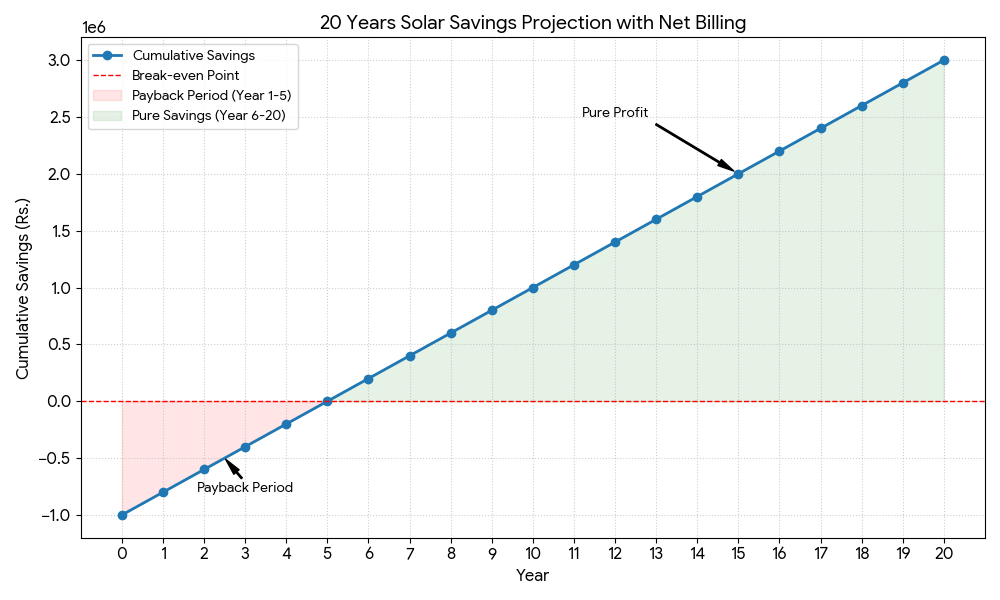
- Even with net billing, the system will pay for itself in 5-7 years
- After that, 13-18 years of almost free electricity
- Property Value Increase:
- Properties with solar installations have higher resale value
- Buyers prefer solar-equipped homes
Hybrid Solar System: The Future-Proof Solution
In the net billing era, a hybrid solar system isn’t just an option — it’s practically a necessity if you want maximum savings. When choosing components for your hybrid system, panel quality matters most. Check our guide on LONGi, Jinko and Canadian Solar: Best Solar Panels for Pakistan to select the right brand for long-term performance. Good panels ensure you generate more power even in low-light conditions, which directly impacts your savings.
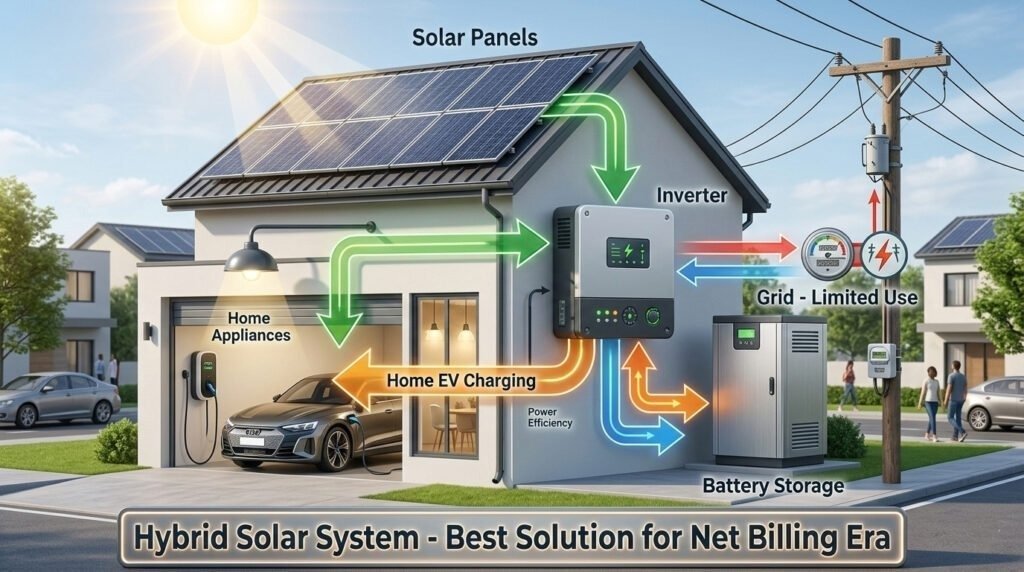
How a Hybrid System Works:
- Day time: Use electricity directly from solar panels.
- Extra units: Store in batteries instead of exporting at just Rs. 11/unit.
- Night time: Use battery power instead of purchasing at Rs. 40-50/unit.
The benefit? No need to buy expensive grid electricity. You’re also protected from future tariff hikes. The beauty of a hybrid system is that it future-proofs your investment.
Solar Investment Future in Pakistan
Despite net billing, solar energy remains the best long-term investment.
Financial Breakdown:
| System Type | Initial Cost | Payback Period | 20 Years Savings |
| On-Grid Solar (No Battery) | Rs. 500,000 | 5-6 years | Rs. 2.5 Million |
| Hybrid Solar (With Battery) | Rs. 800,000 | 7-8 years | Rs. 4 Million |
Note: These are approximate figures. Actual savings depend on your consumption pattern.
Final Thoughts – My Personal Opinion
I’ve watched Pakistan’s solar industry closely for years. When net billing was announced, even I wondered — is solar still worth it?
But after digging deep and talking to installers, I realized something. The game has changed, but it’s far from over. People saying “solar is dead” are only looking at the surface.:
If You’re Already a Solar User
No need to panic. The transition won’t happen overnight. What I tell my clients:
- Track your system — monitor daytime usage vs export
- Plan for battery in the next 2–3 years
- People who installed in 2015–16 have already doubled their investment. You will too.
If You’re Planning to Install Solar Now
This group needs to be smarter:
- First, don’t install a basic on-grid system. It relies entirely on the grid, which is risky now.
- Instead, go for a hybrid system. Yes, it costs more upfront. But you’ll thank yourself later.
- You don’t need a battery for your whole house. Just enough to get through the night.
⚠️ Important: Before installing, read our guide on Common Solar Installation Mistakes and How to Avoid Them .
Need professional help? Check our Solar Installation Services page for trusted installers in your area.
If You’re Confused About Installing Now or Waiting
Most common situation. People say “let’s wait for policy clarity.”
Honestly? Waiting won’t help:
- Tariffs rise 15–20% yearly — next year grid power could be Rs. 50/unit
- Net billing is the new normal — it’s not going away
- The sooner you install, the sooner your payback period starts
My advice? Stop overthinking. Just install. But design smartly — hybrid system, realistic expectations, and professional installation.
Has net metering really ended? Someone told me solar is no longer worth it.
That’s only half true.
Yes, the old net metering system is gone for new connections. But saying “solar is useless” is completely wrong.
I work with solar users every day. Those who manage consumption smartly still save 60–70% on bills. Add a battery, and savings get even better.
So don’t panic. Just get smarter about how you use power.
I already have a 5kW on-grid system installed in 2019. What should I do now?
You’re in a good position. No immediate action is needed. NEPRA has said existing users will eventually shift, but it won’t happen overnight. My personal advice? Over the next year or two, start planning for battery backup. Also, build a habit of running heavy appliances like ACs, washing machines, and motors during the day. That habit alone will protect you when the shift happens.
I want to install solar now. My budget is around 8–9 lakh. What do you suggest?
Go for a hybrid system. A 5kW system with a 5kW battery can fit in your budget. If battery cost feels high, at least get a hybrid inverter so you can add batteries later. I’ve seen too many people install on-grid systems to save money upfront — and regret it later. Learn from their mistakes, not your own.
Rs. 11 per unit for selling seems too low. Will NEPRA increase this rate?
The rate might change, but here’s the thing — the buy rate will always be higher than the sell rate. That’s the whole point of net billing. In Pakistan, grid tariffs are already Rs. 40–50 and rising 15–20% every year. So instead of worrying about the sell rate, focus on using what you generate and storing what you don’t use.
What size battery should I get? Do I need to run my whole house on it?
You don’t need to run everything. Just cover the essentials at night — lights, fans, TV, maybe one AC if it’s an inverter model. For a 5kW system, a 5kW battery is usually enough for an average home. If budget is tight, start with a 3kW battery and expand later. It’s okay to start small.
Will I still get a WAPDA bill after installing solar?
Yes, you will — but the amount will be lower. Under net billing, the units you export are paid for, but if you use grid power at night, that gets added. Getting a zero bill is now difficult, but a 40–50% reduction is still very realistic. I tell my clients: stop aiming for zero bill, start aiming for smart savings.
What’s the bottom line on net metering vs net billing in Pakistan?
Net metering is gone for new users, net billing is here. But with the right strategy, solar still works.