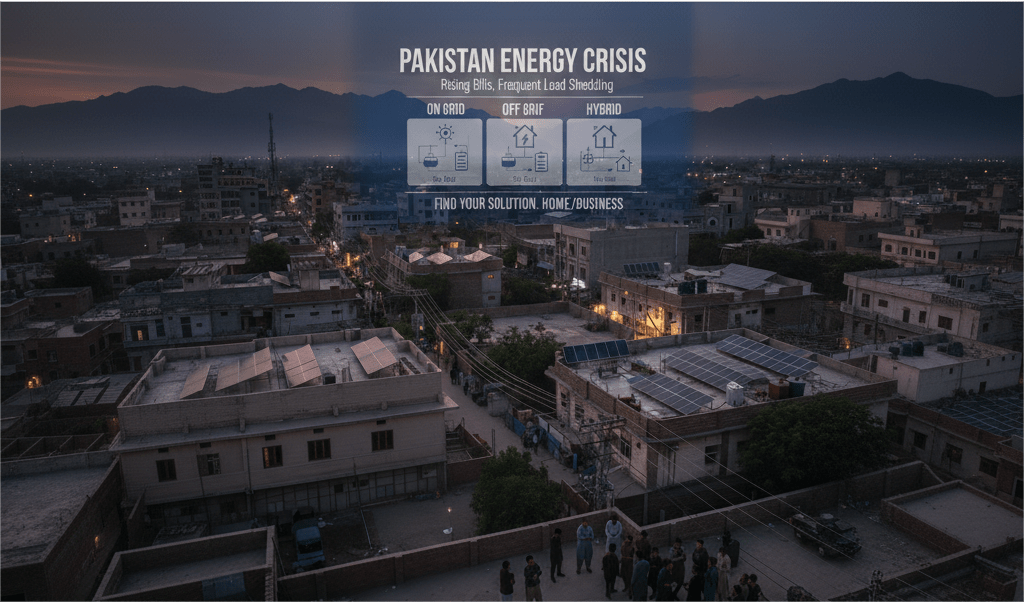
Pakistan is facing one of its most challenging energy crises in recent years. Rising electricity bills, frequent load shedding, and an unreliable power grid have pushed Pakistan towards solar energy.
As a result, solar energy has emerged as a practical solution, leading to a rapid increase in the demand for solar systems. The most commonly used are On Grid, Off Grid, and Hybrid Systems.
1. On Grid Solar System
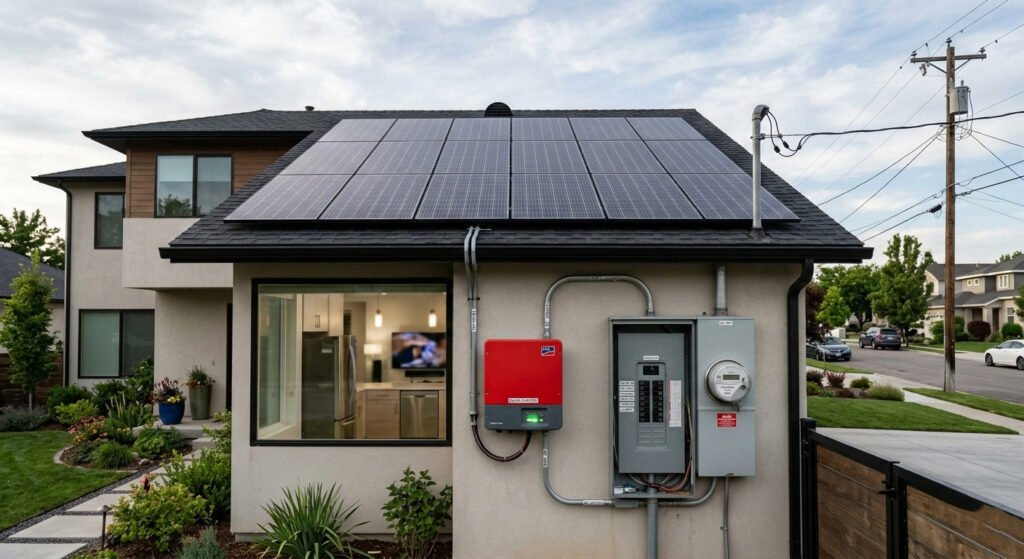
An On Grid system is directly connected to the national grid and does not require batteries for backup.
How It Works:
- Solar panels absorb sunlight and produce Direct Current (DC) electricity during daylight hours
- The inverter converts DC into Alternating Current (AC) for home use
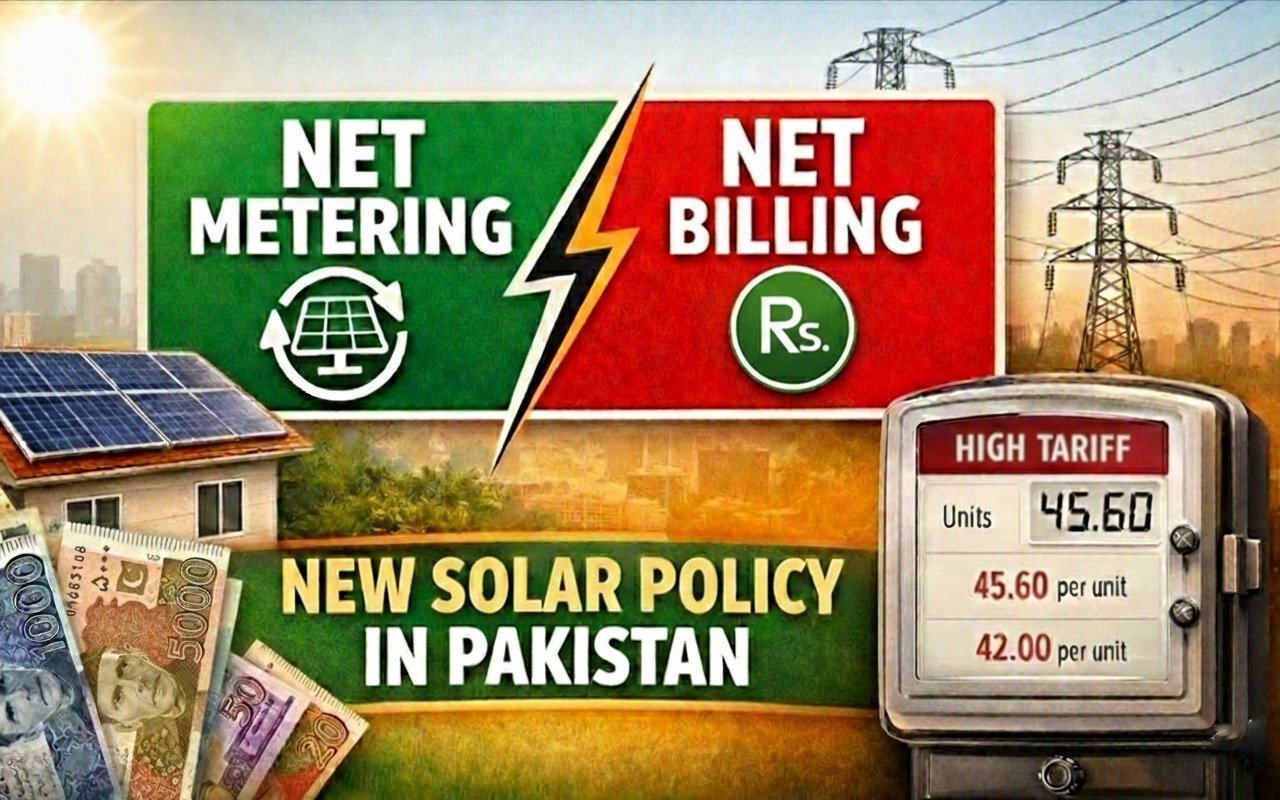
- Excess power generated during the day is sent back to the grid through a process called Net metering, as regulated by NEPRA’s official guidelines.
- This stored power in the grid is used at night
Key Advantages:
- Significant reduction in electricity bills
- Lower installation cost compared to other systems
- Environment friendly with no greenhouse emissions
- Requires minimal maintenance
Where It Is Used:
It is widely used in the commercial, industrial, and residential sectors.
The Main Disadvantage:
It does not function during power outages. Since the system relies entirely on grid availability, it becomes unsuitable for remote or far-flung areas where power supply is either inconsistent or completely unavailable.
2. Off Grid Solar System
In contrast, the Off Grid System operates independently of the grid.
How It Works:
- Solar panels generate electricity which is stored in batteries
- Batteries store electricity for nighttime usage and cloudy days
- The inverter supplies continuous power from batteries
- There is no connection to the national grid
Key Advantages:
- Uninterrupted power supply even during outages
- 24/7 electricity availability
- Zero carbon footprint and eco-friendly
- Complete independence from WAPDA
Where It Is Used:
It is the best option for rural areas, agricultural land, farmhouses, and industrial sites with no grid access.
The Main Disadvantage:
Despite all advantages, it has a high installation cost due to the batteries required for storage.
3. Hybrid Solar System
The Hybrid System has both the features of Off Grid and On Grid systems.
How It Works:
- It operates on the grid but also has battery storage for power backup
- During the day, solar energy powers appliances and charges batteries
- Excess electricity can be sent to the grid for bill reduction
- During power outages, the system automatically switches to battery backup
Key Advantages:
- Provides energy reliability with both grid and battery backup
- Best of both worlds: bill savings plus uninterrupted power
- Automatic switching during outages
Where It Is Used:
It is ideal for areas with frequent power outages. It is commonly used in residential, industrial, agricultural lands, and the commercial sector.
Which Solar System is Best for Pakistan?
Considering Pakistan’s frequent load shedding, unstable grid infrastructure, and rising electricity costs, the Hybrid Solar System is the most practical option.
For Far-Flung Areas:
In remote locations, grid access is limited or unreliable, making hybrid systems essential for daily life.
For Urban Cities:
In cities, increasing power outages disrupt daily life activities despite grid connectivity. Hybrid systems provide the flexibility to use solar energy, grid power, and battery backup whenever needed.
Quick Summary
| System Type | Best For | Main Benefit | Main Drawback |
|---|---|---|---|
| On Grid | Areas with no load shedding | Lowest cost, bill reduction | No power during outages |
| Off Grid | Remote areas with no grid | 24/7 independence | High battery cost |
| Hybrid | Areas with frequent outages | Reliability + savings | Higher initial cost |
Choose the system that fits your specific needs, your location, and your budget. For most Pakistanis facing both high bills and load shedding, the Hybrid Solar System is the recommended choice.
However, remember that even the best system can underperform if not installed correctly. Avoid costly errors by learning from others’ experiences—read our guide on Common Solar Installation Mistakes and How to Avoid Them to ensure your investment delivers maximum performance for years to come.